Do Spices Expire? How to Tell When Your Spice Rack Needs a Clear-Out
Put up Takes about 4 min
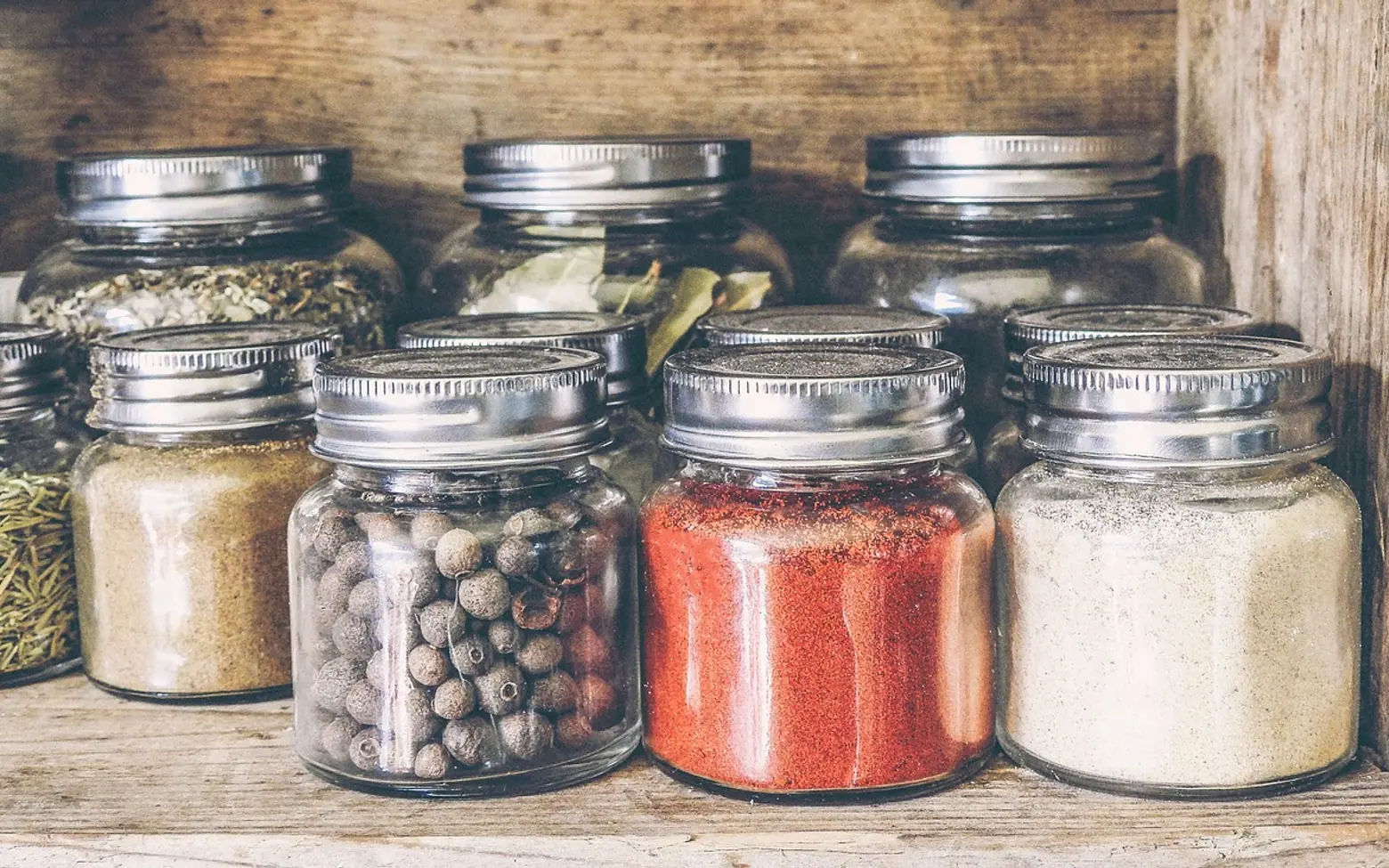
Dried spices do not usually spoil the way milk or bread does. What happens instead is slower and quieter: the aromatic oils that give cumin its warmth or paprika its sweetness evaporate and break down, and the jar ends up holding coloured dust that adds very little to a pot. So the honest answer is that spices rarely become unsafe, but they do expire in the sense that matters to a cook. They stop tasting of anything.
The date printed on the lid is a best-before date, a guide to quality rather than a safety cut-off. A jar a few months past it can still be lively, and an unopened one bought recently can already be dull if it sat in a warm shop window. Your nose is the better judge.
How long spices keep their flavour
The main thing that decides shelf life is surface area. Once a seed or bark is ground, far more of it meets the air, and the flavour leaves faster. Whole spices hold on much longer. The ranges below are rough rules of thumb for jars stored away from heat and light, not fixed limits.
| Type | Examples | Keeps its flavour well for roughly |
|---|---|---|
| Whole spices | Peppercorns, cumin seeds, cloves, cinnamon sticks, nutmeg, cardamom pods | Two to four years |
| Ground spices | Ground cumin, coriander, ginger, cinnamon, turmeric, paprika | One to three years |
| Dried leafy herbs | Oregano, thyme, basil, parsley, dill | One to three years |
| Spice blends | Curry powder, garam masala, taco seasoning, mixed spice | One to two years, sooner if they contain dried garlic or onion |
| Chilli flakes and powders | Cayenne, chilli flakes, chipotle powder | Around two to three years, though colour fades first |
Red spices such as paprika and chilli powder tend to lose colour along with flavour, so a jar that has turned from bright red to brick brown is usually past its best.
The sniff, rub and look test
Checking a jar takes about ten seconds:
- Look. Strong, even colour is a good sign. Faded, greyish or patchy powder suggests the jar has been open a long time or sat in the light.
- Rub. Tip a little into your palm and crush it between your fingers. Whole spices can be cracked with the back of a spoon.
- Smell. A fresh spice should be obvious straight away. If you have to press your nose into your hand to find any scent, it will add very little to a dish.
- Taste a tiny pinch if you are still unsure. Flat or dusty means replace; bright and clear means keep.
When a jar should go straight in the bin
Although age alone is rarely a safety problem, moisture can be. Throw a spice away if you see any of these:
- Fuzzy or coloured spots, which point to mould.
- A musty, damp or sour smell that has nothing to do with the spice itself.
- Hard clumps that will not break up, especially in a jar that has been near the kettle or hob.
- Small insects, webbing or tiny holes in whole seeds, which can happen with flours and grains stored nearby as well.
If in doubt, it is cheaper to replace a jar than to spoil a whole meal.
Storing spices so they last longer
Heat, light, air and steam are what wear spices down, so good storage is mostly about keeping those away.
- Keep them away from the cooker. A rack above the hob looks handy, but rising heat and steam shorten the life of every jar on it. A drawer or a cupboard on a cooler wall works better.
- Choose closed, opaque or dark storage. Clear jars are fine inside a cupboard; on an open shelf in a sunny kitchen, they fade quickly.
- Close lids firmly and avoid shaking a jar directly over a steaming pan, which lets moisture creep in. Measure into a spoon or your hand first.
- Buy small amounts of spices you use only now and then. A large bag of something you reach for twice a year will be dull long before it is finished.
- Write the opening date on a piece of tape on the lid. It takes the guesswork out of the next clear-out.
Pastes and fresh blends are a different story. Opened jars of curry paste, harissa or ginger paste usually belong in the fridge, so check the label and give them a spot on a door shelf, as described in our walk-through of organising a fridge zone by zone.
Waking up a tired spice
A jar that is a little faded but not musty can still earn its place. Warming spices brings out what flavour is left:
- Toast whole seeds in a dry pan for a minute or two until fragrant, then grind them.
- Fry ground spices briefly in oil or butter at the start of a recipe, before adding liquid.
- Use a little more than the recipe says, tasting as you go.
A dry-pan toast also works for seeds you plan to snack on; the spice blends in our guide to roasting pumpkin seeds are a good use for jars you want to finish.
Using up what you have
A clear-out often turns up three jars of the same thing and several you forgot you owned. Rather than binning everything, put the strongest-smelling jars at the front and plan a few meals around them. Warm spices such as cinnamon, cardamom and ginger suit porridge, baked fruit and festive bakes; they are also the backbone of many traditional sweets, including several of the Korean desserts found in Seoul. Cumin, smoked paprika and chilli give a lift to beans, roast vegetables and eggs, which helps when you are cooking with fewer carbohydrates, as the ideas for satisfying cravings on a keto diet show.
From our desk
Why we keep our promises small
It is tempting to tell readers that one recipe or one routine will change everything. We would rather give you a method that works on a damp Wednesday and leave the big claims to someone else.
When a question needs a person who can actually look at you, we will say so every time.
Ida, Casper and Maren
Good to keep in mind
How we treat information
A few principles that shape every guide before it is published.
Official food-safety and public health guidance comes before anything we read on a forum or a sales page.
When advice differs between countries or experts, we say so instead of picking a side and calling it settled.
Product instructions and the advice of your own dentist or doctor always outrank a general article, including ours.
We leave out figures we cannot stand behind, which is why our guides rarely quote percentages or nutrient amounts.