How to Make Overnight Oats
Put up Takes about 3 min
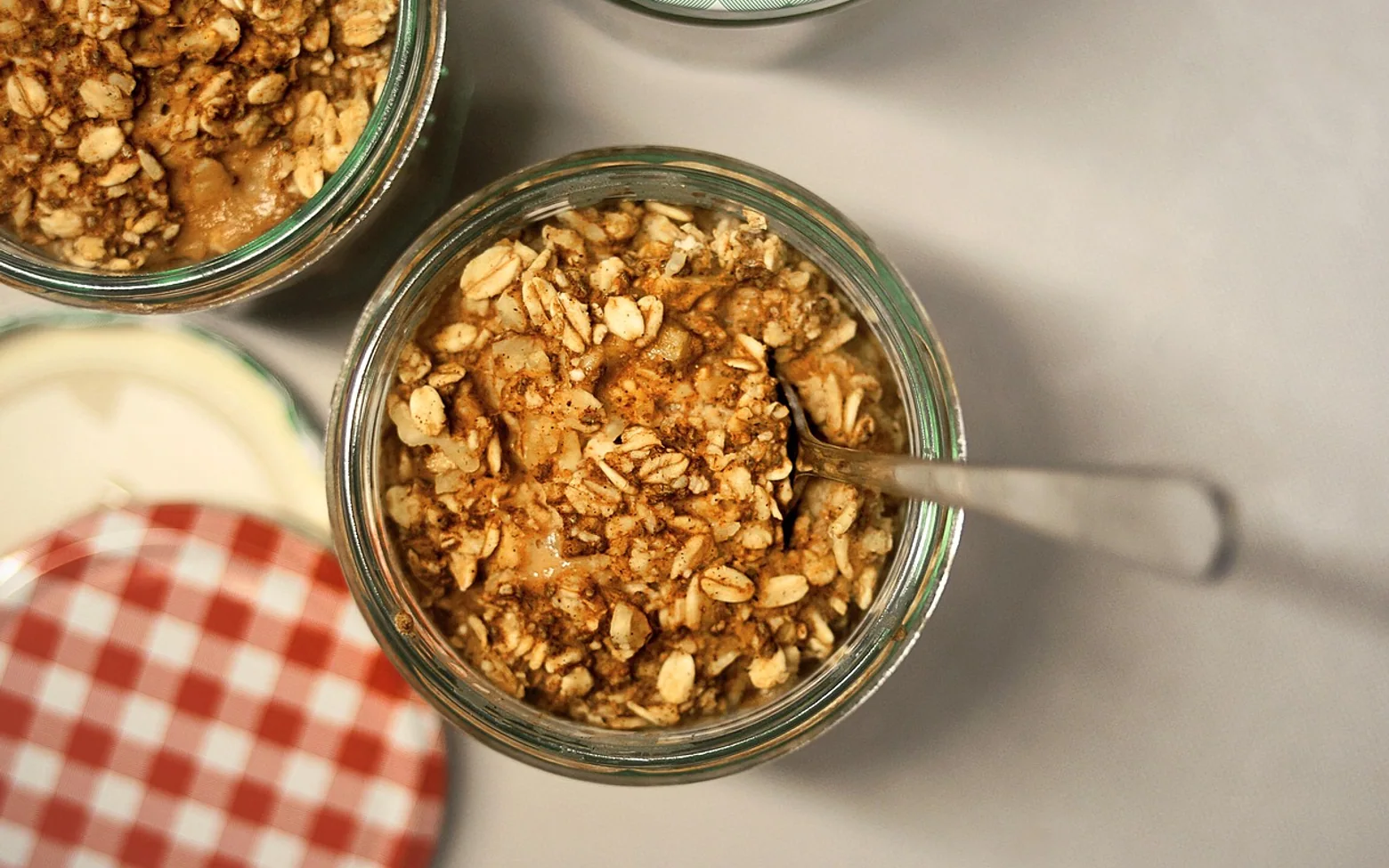
Overnight oats are breakfast you make while the kettle boils the night before. You stir oats into milk or yoghurt, put the jar in the fridge and let time do the work. By morning the oats have softened into something creamy and spoonable, a bit like cold porridge with a better texture. There is no pan to wash and nothing to watch, which is the whole appeal on busy mornings.
The basic mix
Start with equal amounts of oats and liquid. That is easy to remember and easy to adjust: add more liquid if you like it loose, less if you prefer it thick.
- Rolled oats — the classic choice. They soften fully but keep some shape.
- Milk of your choice — dairy, oat, soya or almond all work.
- A spoonful of yoghurt — optional, but it makes the result creamier and slightly tangy.
- A pinch of salt — it sounds odd, yet it brings out the other flavours.
- Something sweet, if you want it — mashed banana, grated apple, a little honey or maple syrup.
Step by step
- Put the oats in a jar or a container with a lid.
- Pour in the milk and add the yoghurt, salt and any sweetener.
- Stir well, making sure no dry pockets are hiding at the bottom.
- Add seeds or spices now if you are using them.
- Close the lid and refrigerate overnight, or for at least a few hours.
- In the morning, give it a stir, loosen with a splash of milk if needed and add your toppings.
Which oats work best?
| Type of oat | How it turns out overnight |
|---|---|
| Rolled (old-fashioned) oats | Soft and creamy with a little chew; the most reliable choice |
| Quick or instant oats | Very soft, almost smooth; good if you dislike texture |
| Steel-cut oats | Stay firm and chewy; they need longer soaking and suit people who like bite |
Oats are naturally free of gluten, but they are often processed alongside wheat. If you avoid gluten for a medical reason, look for oats labelled gluten-free and check with your doctor about whether oats suit you at all.
Flavour combinations to try
Apple pie
Grated apple, cinnamon and a few chopped walnuts stirred in the night before. Top with a little extra apple in the morning for crunch.
Berry and lemon
Frozen berries go straight into the jar; they thaw overnight and turn the oats pink. Add lemon zest and a spoon of yoghurt on top.
Peanut and banana
Mash half a banana into the mix and swirl through a spoon of peanut butter. Slices of the other half go on top.
Carrot cake
Finely grated carrot, a few raisins, cinnamon and a little nutmeg. It tastes far more indulgent than it is.
Cocoa and orange
A spoon of unsweetened cocoa powder and some orange zest. Stir thoroughly so the cocoa does not clump.
Seeds, nuts and extra texture
Chia or ground flax seeds thicken the mixture as they soak, so add a bit more liquid when you use them. Nuts and crunchy toppings are best added just before eating; left overnight they go soft. Toasted coconut, a handful of granola or some sliced fruit all give a contrast to the creamy base.
Can you eat them warm?
Yes. If cold breakfast does not appeal on a winter morning, tip the oats into a bowl and warm them gently in the microwave or a small pan, stirring and adding a splash of milk. Make sure your jar is suitable before putting it in the microwave.
How long do overnight oats keep?
A batch made with fresh milk is best eaten within a couple of days. Keep the jars covered in the fridge, and leave fresh fruit and crunchy toppings out until the day you eat them so nothing turns watery. If anything smells sour or looks off, throw it away.
Making two or three jars at once is a simple way to take the pressure off busy mornings. If you like to prepare food ahead, a pot of fluffy quinoa for lunches fits into the same routine.
Fitting them into your week
Overnight oats are flexible enough to work with most eating styles: dairy-free with plant milk, higher in protein with thick yoghurt, lighter with more fruit and less sweetener. If you are thinking about breakfast as part of a wider change to the way you eat, our guide to healthy eating patterns looks at the bigger picture.
The best version is the one you will actually make again. Start with the plain mix, see how you like the texture, and change one thing at a time.
From our desk
Why we keep our promises small
It is tempting to tell readers that one recipe or one routine will change everything. We would rather give you a method that works on a damp Wednesday and leave the big claims to someone else.
When a question needs a person who can actually look at you, we will say so every time.
Ida, Casper and Maren
Good to keep in mind
How we treat information
A few principles that shape every guide before it is published.
Official food-safety and public health guidance comes before anything we read on a forum or a sales page.
When advice differs between countries or experts, we say so instead of picking a side and calling it settled.
Product instructions and the advice of your own dentist or doctor always outrank a general article, including ours.
We leave out figures we cannot stand behind, which is why our guides rarely quote percentages or nutrient amounts.